

February 17, 2026
.png)
When AI shopping agents began reshaping e-commerce, one question quickly rose to the top in fashion:
“What size will actually fit me?”
In a special breaking-news episode of Retailgentic hosted by Scot Wingo, Jessica Arredondo Murphy, Co-Founder and CEO of True Fit, announced the company’s answer: a specialized Agentic Commerce fit agent designed to solve sizing uncertainty at the moment shoppers need it most.
Jessica notes that fit and sizing account for ~70% of shopper questions in fashion-related agent experiences. That matters because when fit is uncertain, shoppers don’t just hesitate — they:
And the industry is now facing a new reality: AI agents are rapidly becoming the “front door” to the shopping experience. Retailers need fit guidance that works not only on the PDP but also wherever shoppers ask questions—search, chat, merchandising, and beyond.

For years, True Fit has helped retailers guide shoppers through sizing decisions via on-site fit tools. But as Jessica shared on the podcast, that experience was inherently static—one call to action, one recommendation.
Agentic commerce changes that.
Instead of stopping at “What size should I buy?”, shoppers can now ask deeper, more personal questions:
The new fit agent turns sizing from a single answer into an ongoing, confidence-building conversation — more like an expert in-store associate than a widget.
.png)
Generic LLM agents can summarize what’s visible on a PDP, scrape the web, and reference reviews — but fit is a dynamic problem:
As Jessica explained, this is where specialized intelligence matters most.
True Fit is announcing its first specialized agent for size and fit, evolving beyond the legacy “static widget” experience to a conversational, adaptive fit layer that handles nuance.
Jessica describes the shift clearly:
The goal: bring “in-store expert help” into real-time digital shopping moments—without requiring shoppers to fill out forms.
This data foundation powers what True Fit describes as a “fit graph” — connecting shopper profiles, product attributes, and real-world outcomes.
True Fit doesn’t just “read the PDP.” True Fit connects:
…into what she describes as a fit graph, enabling guidance grounded in how shoppers actually buy, keep, and return items.
So instead of generic guidance, shoppers receive answers based on patterns like:
The result: more confident purchases and fewer returns due to size sampling.
“In the AI era, one of the last true competitive moats is proprietary data — painstakingly built over decades, strengthened by network effects, and nearly impossible to recreate with AI alone. Sounds nearly impossible to check all these boxes, but…WE FOUND ONE! True Fit is in the enviable position of having a data set that fits this pattern.”
Scot Wingo, Retailgentic
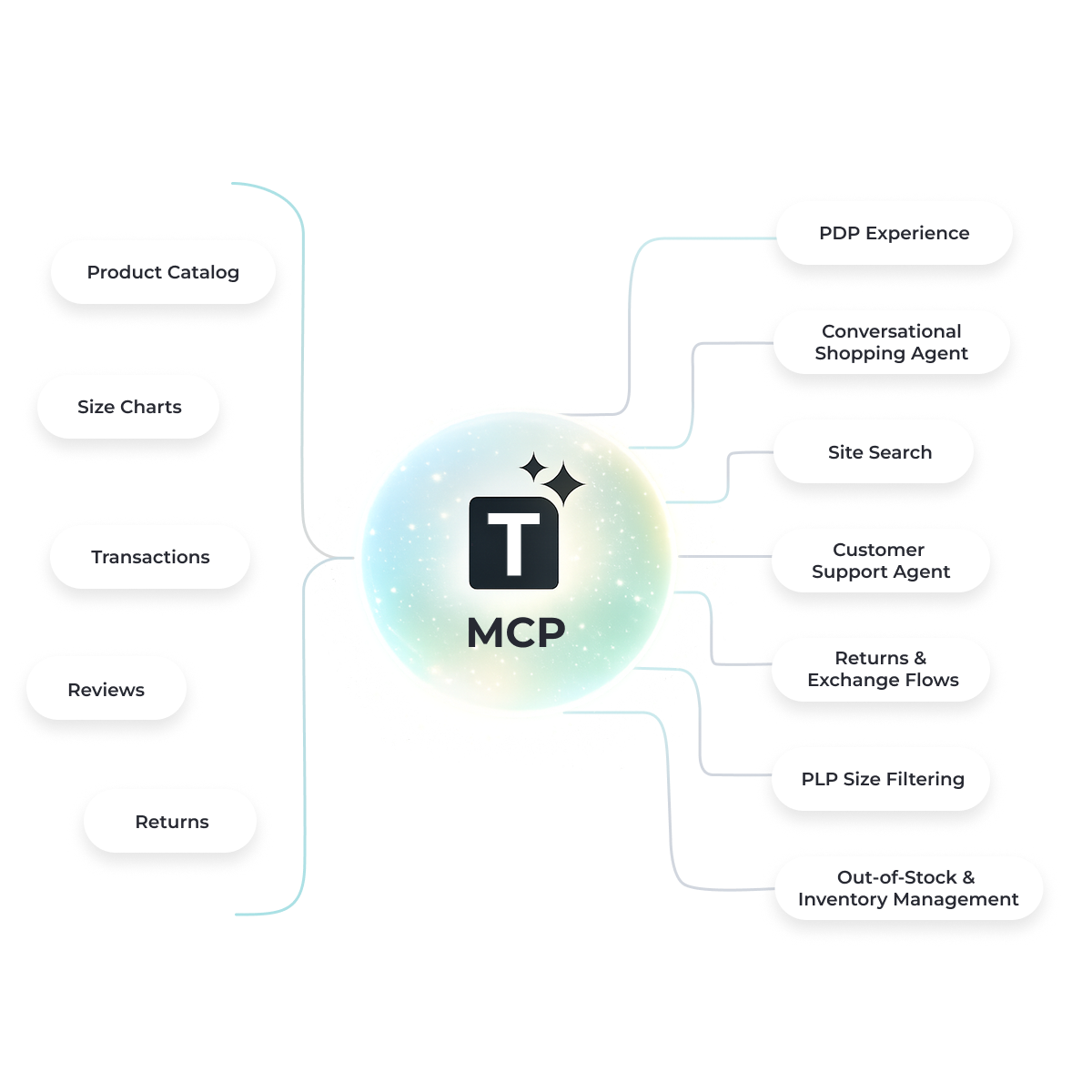
Alongside the fit agent, True Fit also announced its Model Context Protocol (MCP), enabling other AI agents to tap into True Fit’s fit intelligence layer.
For retailers, that means flexibility:
In practice, this aligns with how many larger retailers are headed: a “super agent” orchestrating multiple specialized tools. Retailers don’t have to choose between their preferred agent strategy and fit intelligence. They can plug size-and-fit into whichever agent experience they’re building.
As AI agents increasingly shape product discovery and decision-making, fit is emerging as one of the highest-impact conversion levers in apparel and footwear.
Specialized fit intelligence helps retailers:
Generic agents can’t reliably solve fit with generic data. True Fit was built for this exact problem — and is now bringing that specialization into a modern agentic experience.
True Fit’s Agentic Commerce fit agent will begin rolling out to select partners in March, with broader availability to follow.
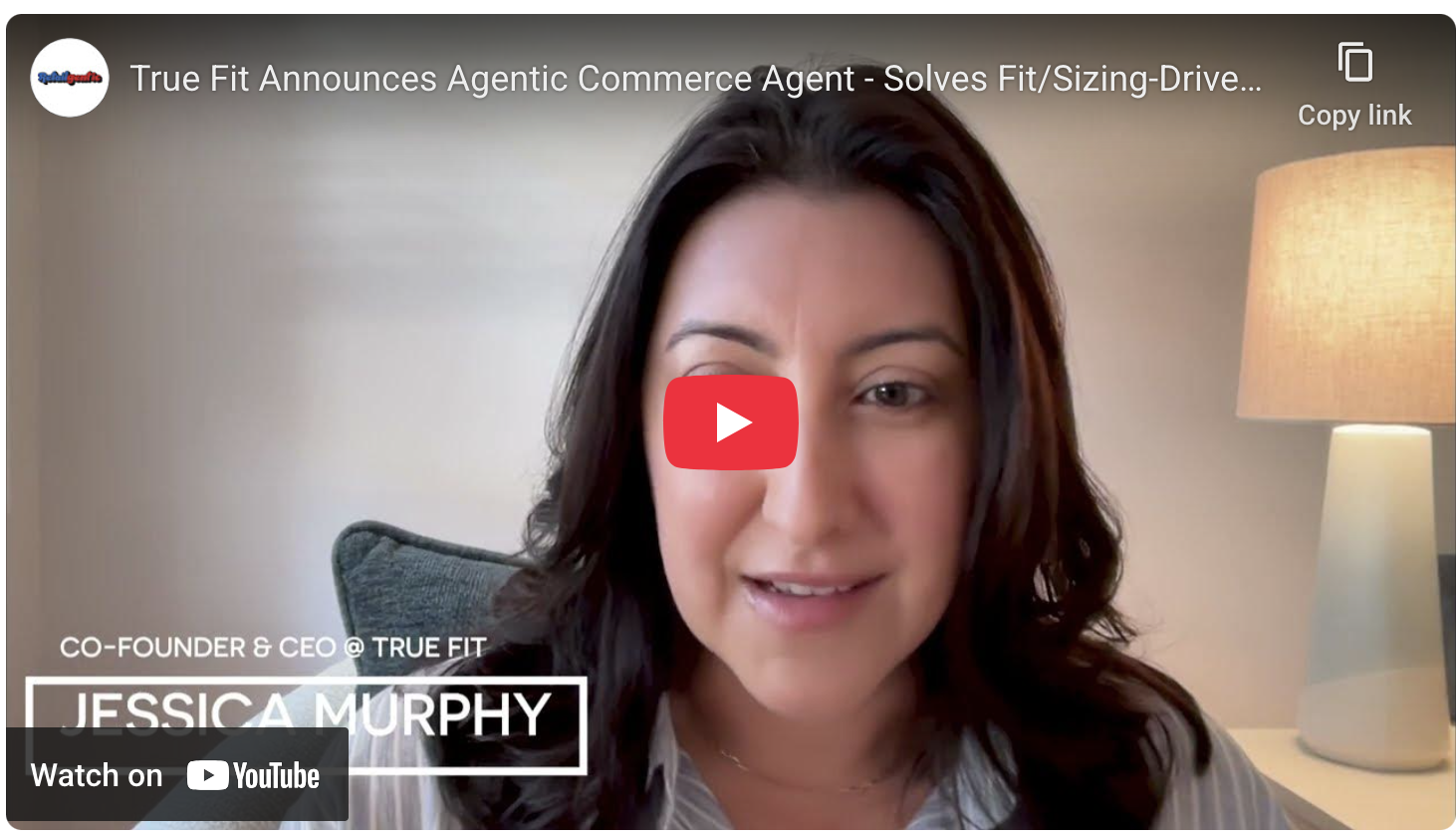
Watch the full episode
Listen to the full episode
Read this on Substack
Request a demo to learn how True Fit’s fit agent + MCP layer can improve conversion and reduce fit-driven returns.